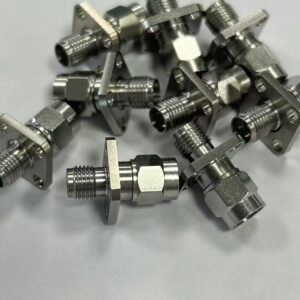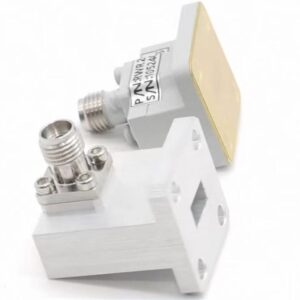

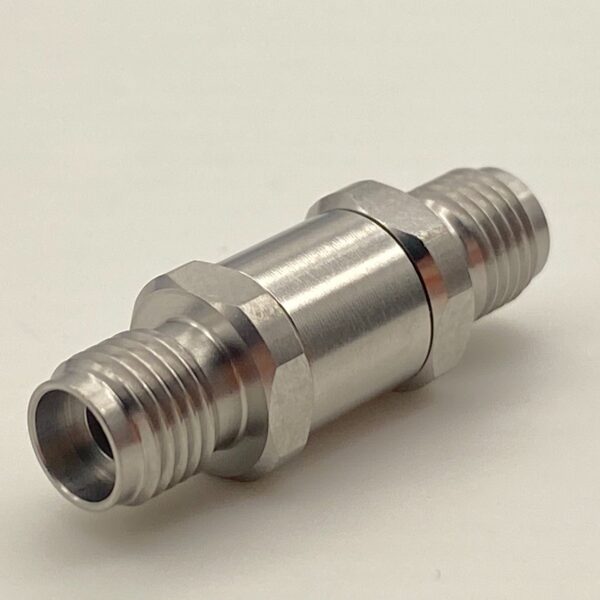
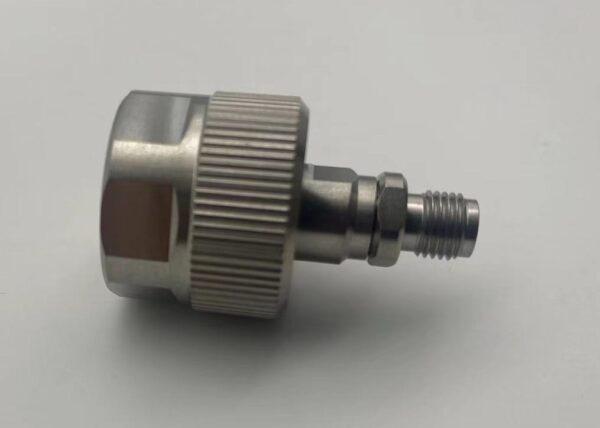
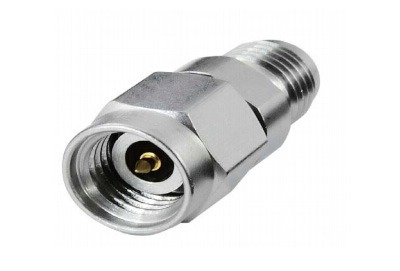
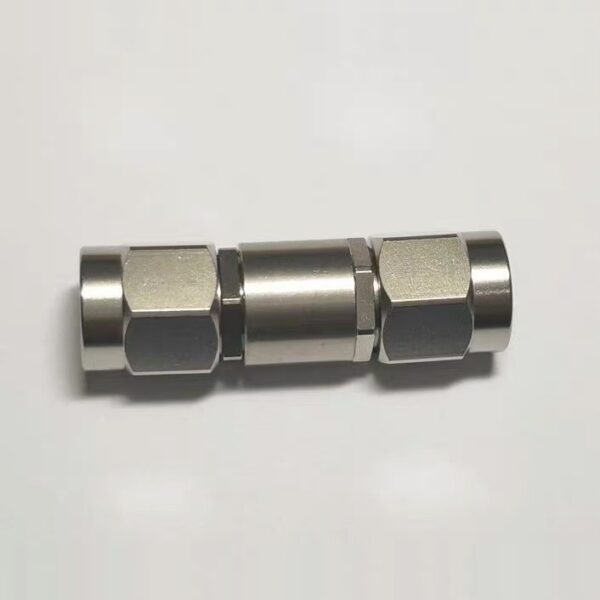
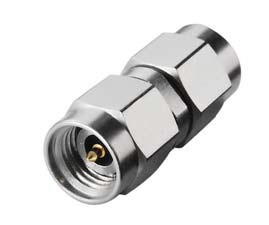
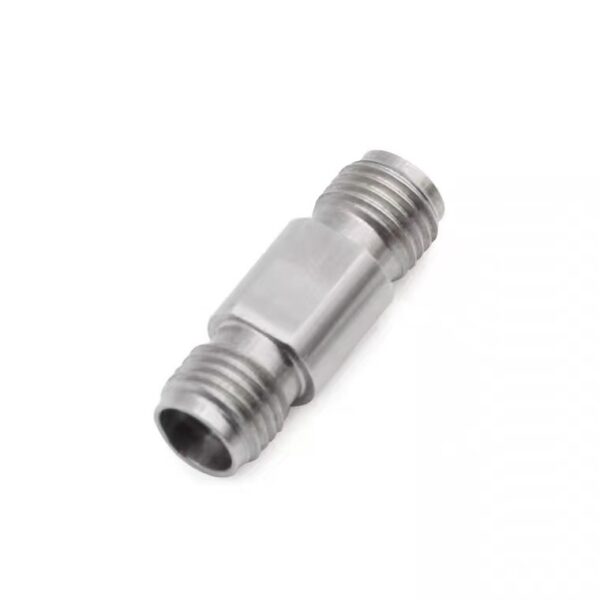
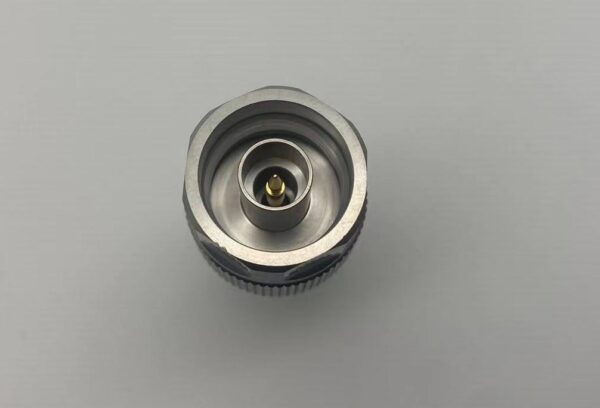
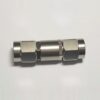
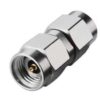
Precision coaxial adapters built to IEEE 287 practice: beryllium copper gold-plated center contacts, PEI or PTFE support beads, and passivated stainless steel bodies. Use them as connector savers on VNA and signal analyzer ports, or to move between 2.92 mm, 2.4 mm, 3.5 mm, and N interfaces.
Supplier datasheet figures
- Impedance: 50 Ω
- Frequency: DC–40 GHz (3.5 mm to 2.92 mm type: DC–26.5 GHz, limited by the 3.5 mm side; 2.92 mm to N type: limited by the N side)
- VSWR: 1.15:1 max (3.5 mm to 2.92 mm), 1.2:1 max (2.4 mm to 2.92 mm)
- Insulation resistance: ≥ 5000 MΩ; test voltage 1000 V
- Mating cycles: ≥ 1000
- Temperature: −55 °C to +155 °C
- Coupling torque: 2.92 mm / 3.5 mm about 0.9 N·m (8 in-lb); 2.4 mm about 0.9 N·m
Which type do I need?
- 2.92 mm F–F: joins two male-terminated cables.
- 2.92 mm M–M: joins two female ports.
- 2.4 mm (M) to 2.92 mm (F): 2.4 mm and 2.92 mm do not mate directly; this adapter connects a 2.92 mm cable to a 2.4 mm port, up to 40 GHz.
- 2.92 mm (F) to N (M): puts a 2.92 mm cable on an N-type instrument port.
- 3.5 mm to 2.92 mm: 3.5 mm and 2.92 mm are mechanically compatible, but this adapter keeps a worn part off your 2.92 mm port. Tell us the gender pair (M–F, F–M, or F–F) in the order note.
Ordering notes
- Ships within 15 business days after payment (made to order or held at the factory). We email you if that changes.
- Ships from China. Duties and import taxes are included: we ship duties paid (DDP), so there is nothing extra to pay at delivery.
- Figures above are supplier datasheet values, not a Kymopsis lab report. Ask us for the supplier test data where one exists.
- Need a different band, connector, gender, or length, or more than 10 pieces? Request a quote.