

RF Bench Basics
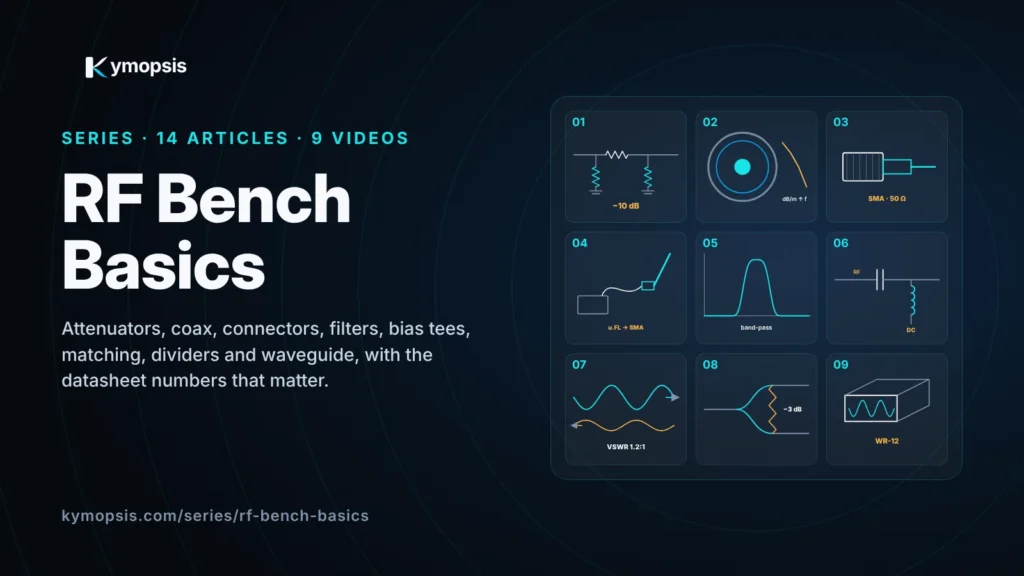
Hands-on RF for the bench: attenuators, coax loss, connectors, filters, DC blocks and bias tees, 50 ohm matching, power dividers and waveguide, each with the datasheet numbers that matter and a short video.
Part A · Levels, cables and connectors
- 1RF Attenuators Explained: dB, Pi and T Pads, and Return LossWhat an RF attenuator does, the decibel arithmetic, the resistor values inside pi and T pads, why a pad improves return loss and where that stops.

- 2Coax Cable Loss vs Frequency: What Your SDR Cable Costs YouHow to read coax loss from a datasheet, why loss rises with frequency and length, and why a lossy cable in front of a receiver costs sensitivity.

- 3SMA vs RP-SMA vs BNC vs N: Choosing the Right RF AdapterWhy an SMA and an RP-SMA can screw together and still pass nothing, and how to pick SMA, BNC, N and UHF adapters by gender, rated range and impedance.

- 4ESP32 External Antenna: U.FL to SMA Done RightAdd an external antenna to an ESP32, LoRa or radar module with a U.FL socket: pigtail and connector genders, SMA vs RP-SMA, pigtail loss from the datasheet, …

Part B · Filters, DC and matching
- 5SDR Filters Explained: Low-Pass, Band-Pass and Band-StopWhy an SDR needs a filter, the four filter shapes, how to read a filter datasheet (and its gaps), and whether the filter goes before or after the LNA.

- 6DC Block and Bias Tee Explained: DC and RF on One CoaxHow a DC block and a bias tee work, why both have a lowest frequency, what the ratings mean and how to power an LNA or active antenna over coax safely.

- 750 Ohm, VSWR and Return Loss Explained (and What a Load Does)Why RF uses 50 ohms, how reflection coefficient, return loss and VSWR relate, how much a mismatch really costs, and what a 50 ohm termination is for.

- 8RF Power Dividers and Combiners Explained: How a Wilkinson WorksHow an RF power divider splits a signal while keeping ports matched and isolated, why a 2-way split costs 3 dB, the catch when combining, and how to read the…

Part C · Waveguide and mmWave parts
- 9Waveguide Explained: Cutoff Frequency, TE10 and WR SizesHow a rectangular waveguide works: why mmWave uses pipes instead of coax, cutoff frequency c/2a, the TE10 mode, WR-15/12/10 sizes, guide wavelength and flanges.

- 10Machined or Metallized Plastic? How Waveguide Antennas and Horns Are Built, 10 to 300 GHzSplit blocks, EDM, electroforming, die casting and plated injection mouldings compared: where the seam goes, what tolerance each route holds, and why gold fl…

- 11Wavelength, Machining Tolerance and Test Cost: Why mmWave Parts Get ExpensiveWaveguide size, tolerance budget, surface roughness and test setup band by band, from WR-90 to WR-3, with the numbers behind the price jump above 40 GHz.
Part D · Bench recipes
- 12SMA Attenuator to Protect a Spectrum Analyzer or SDR InputHow many dB, how many watts and when you also need a DC block: choosing a fixed SMA attenuator to protect a spectrum analyzer, SDR or VNA input.

- 13NanoVNA Accessories: Cables, Adapters and Pads You NeedWhich test cables, adapters, pads and loads actually improve NanoVNA measurements, and why calibration decides most of it.

- 14How to Power a GPS Antenna, LNA or LNB with a Bias TeeWire a bias tee to power an active GPS antenna, mast-head LNA or LNB over coax for an SDR: which port goes where, how to set the supply, and the mistakes tha…
